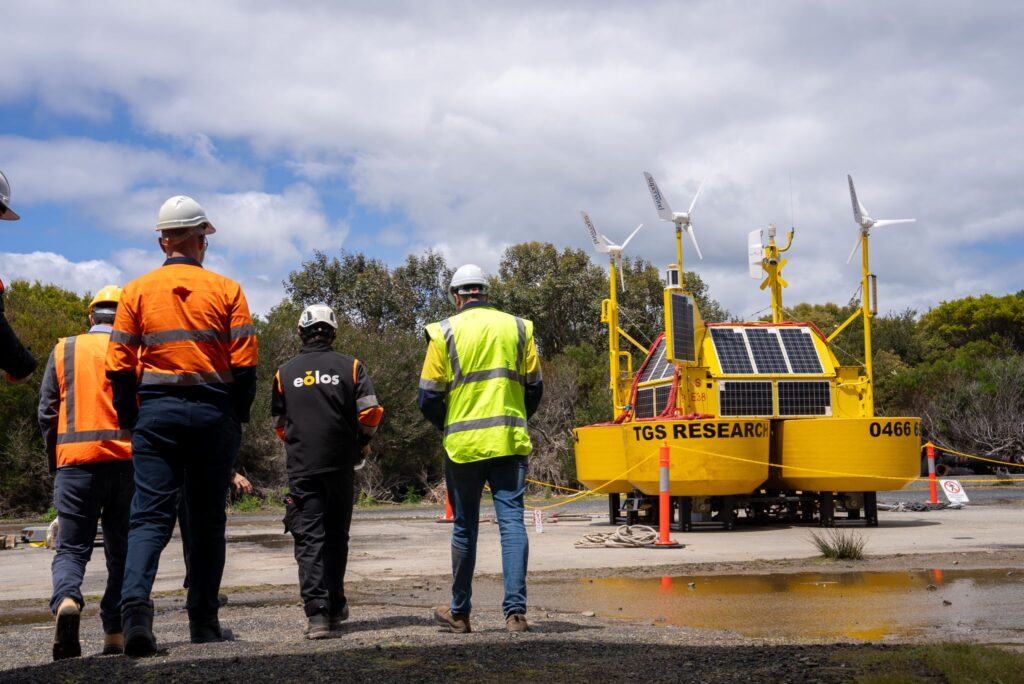
Ocean Winds has launched a four-month geophysical survey off the Gippsland coast, using advanced, non-invasive sonar technology to gather critical seabed and subsurface data.
The low-impact campaign supports environmental protection and regulatory approvals as the High Sea Wind project advances toward up to 1.3 GW of clean energy.
25 March 2026 – Melbourne, Australia. Ocean Winds has commenced a geophysical survey campaign off the Gippsland coast representing another technical milestone for the proposed High Sea Wind offshore wind project. As part of the permitting process, the four‑month program will collect essential seabed and subsurface data to inform turbine placement, cable routing, and overall project design.
Delivered in partnership with EGS Australia, a multi-disciplinary hydrographic and geophysical survey services provider, the campaign will deploy both nearshore and offshore vessels equipped with advanced sonar‑based systems. These non‑invasive technologies will characterise seabed conditions, providing high‑quality data to support engineering design, environmental assessment, and future investigations.
Environmental protection remains a core commitment to the High Sea Wind Project. All survey methods are low‑impact, with qualified marine mammal observers present onboard throughout operations to ensure the protection of marine life.
“Comprehensive geophysical data is fundamental to designing an offshore wind project that is safe, efficient, and environmentally responsible. These surveys mark an important milestone for High Sea Wind as we continue to build a strong technical foundation.” said Pelayo Rodriguez Alonzo, Head of Business Development for Japan and Asia Pacific at Ocean Winds.
The data collected during this campaign will be integrated with future environmental and technical investigations, supporting the project’s progression through the regulatory assessment process. Subject to approvals, High Sea Wind aims to deliver up to 1.3 GW of clean energy capacity, contributing to Australia’s emerging offshore wind industry and the nation’s energy transition.